CURE Workshop
Quick Links
- Past CUREs
- Student Registration*
- Faculty Registration*
*See “Student Travel Info”.
- Pay Registration Fee
- Event Info
- Workshop LMS
When?
Application Deadline:
May 15, 2026
Pre-Workshop Online Boot Camp:
June 1 – June 12, 2026
In-Person Session at University of Richmond:
June 14 – June 19, 2026
Post-Workshop Weekly Virtual Classroom:
July 6 – October 19, 2026
Research Presentations at BEER-XIX:
November 2026
Where?
Richmond, VA (June 14–19, 2026)
Virtual Meeting Hall (for pre- and post-workshops)
What?
A workshop where undergraduate students and faculty research mentors gather to experience the complete process of conducting research in mathematical biology.
How?
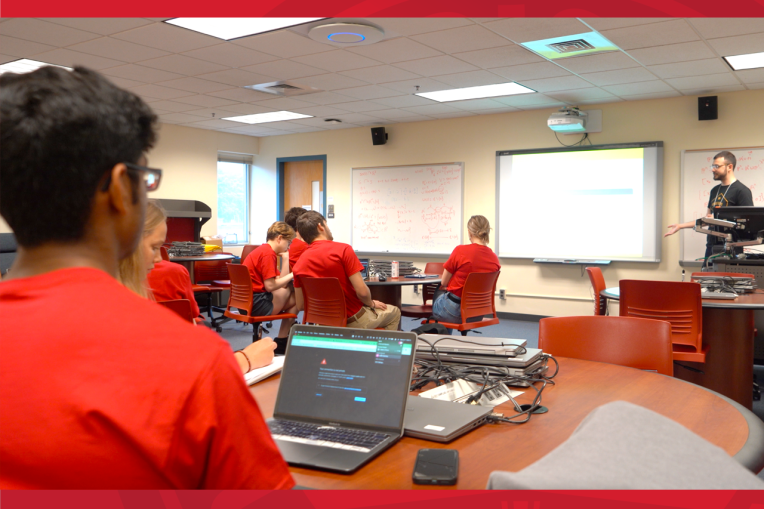
Faculty mentors present cutting-edge research projects that they are interested in directing and collaborating on with other faculty. Then students visit with each faculty mentor to decide which project they want to work on throughout the year. The workshop continues with programming and scientific/technical writing boot camps. The workshop also includes presentations on various career directions. Current and former graduate students give presentations on graduate school experience and life as a professional working in a data-analysis related industry. Each day ends with a fun activity.
Cost?
All travel and registration expenses for institutional members are covered by the IBA. Individual members and non-members are encouraged to seek funding from their home institutions to cover travel expenses and the registration fee, as the IBA provides participants’ workshop meals only.


Why?
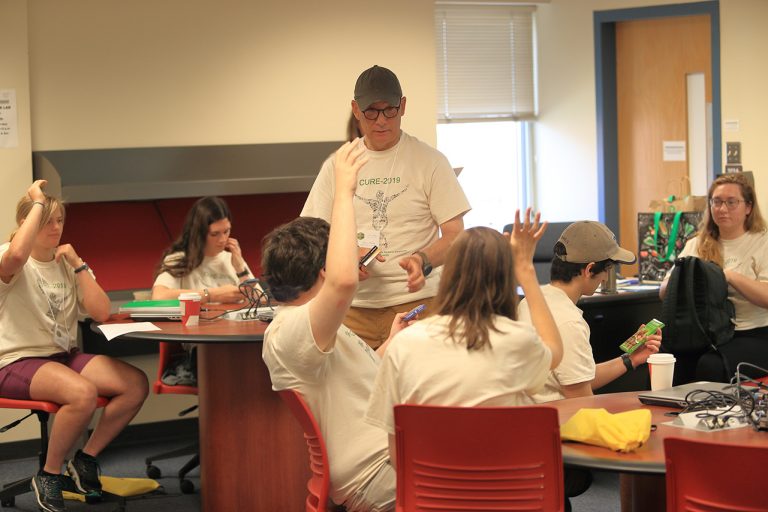
Because one of the main missions of the IBA community is to create opportunities for undergraduate students to be actively involved in cutting-edge research in mathematical biology. The IBA is dedicated to provide the necessary platform and the needed resources continuously so that the next generation of researchers experience the process of conducting research from its start to finish, namely, the initiation of a project, collaboration across institutional boundaries, scientific writing, and dissemination via published articles, and conference presentation.